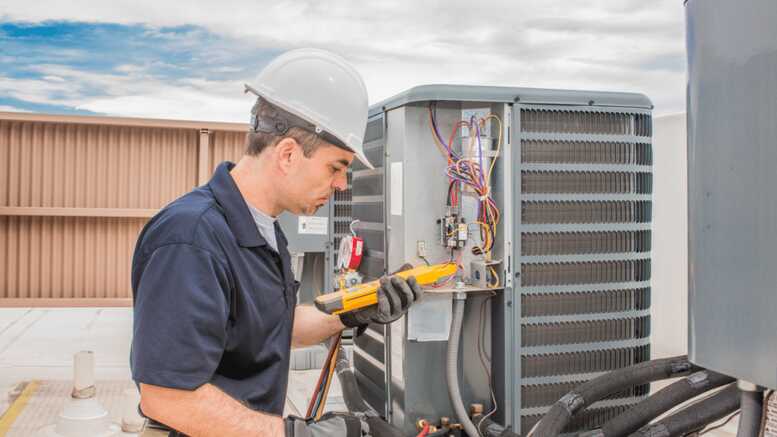
HVAC static pressure plays a major role in how efficiently air moves through a heating and cooling system. When pressure becomes too high, it can lead to weak airflow, uneven comfort, higher energy use, and added strain on equipment. Understanding these pressure problems can help homeowners recognize when HVAC repair may be needed and why proper airflow testing matters.
Page Contents
What Is HVAC Static Pressure
HVAC static pressure is the resistance air encounters as the blower moves it through the heating and cooling system. It is commonly measured in inches of water column, written as “in. w.c.”
Every forced-air HVAC system has some resistance from the return ducts, air filter, evaporator coil, supply ducts, fittings, grilles, registers, dampers, and other components. The blower must overcome that resistance to deliver the amount of air the equipment needs.
Static pressure matters because every blower has a limit to how much airflow it can deliver at a given resistance, and an HVAC system is designed to operate within a specific airflow and pressure range. As resistance rises, system airflow can fall or the blower may increase its effort to compensate, depending on the motor and controls.
Excessive resistance can reduce airflow even when the blower is running at full speed. That can affect heating and cooling capacity, temperature control, humidity removal, noise, energy consumption, run times, and equipment life.
Static pressure is therefore one of the most useful measurements for determining whether an HVAC system can actually move air as intended. It is most useful when treated as a diagnostic measurement rather than a standalone number, because where the pressure occurs often matters as much as the total reading.
How Static Pressure HVAC Affects Airflow And Efficiency
Static pressure and airflow are closely connected. As resistance in the system increases, the blower generally has to work harder to move air through the duct system. Depending on the type of blower motor and its controls, airflow may decrease, electrical consumption may increase, or both may occur. For static pressure HVAC testing, technicians need to consider both the resistance in the system and how the blower responds to it.
Low airflow can create several comfort problems. Rooms may take longer to reach the thermostat setting, certain areas may receive too little conditioned air, temperatures can vary significantly from room to room, weak register airflow may occur, and humidity control may suffer during cooling season.
The equipment itself may also operate less efficiently. An air conditioner or heat pump depends on adequate airflow across the indoor coil to transfer heat properly. A furnace similarly requires sufficient airflow across the heat exchanger. When airflow falls outside the equipment’s intended range, the system may run longer, cycle improperly, operate noisily, or experience excessive component temperatures.
Some variable-speed motors attempt to maintain airflow by increasing speed as resistance rises. That can preserve comfort for a while, but it may increase electrical consumption and noise. Other blowers may simply deliver less air as static pressure increases.
This is why a home can feel reasonably comfortable while the duct system is still operating under excessive pressure. Comfort alone does not confirm that airflow is healthy.
Static pressure testing gives a HVAC technician a way to evaluate the resistance behind these symptoms instead of relying only on room temperature or vent airflow.
Causes Of High Static Pressure HVAC
High static pressure usually means the blower is trying to move air through more resistance than the system was designed to handle. The restriction can occur on the return side, supply side, or both. Understanding static pressure in HVAC systems helps identify whether that resistance is concentrated in one part of the system or spread across several components.
Common causes include undersized return ducts, small or poorly selected return grilles, undersized supply ducts, restrictive or dirty air filters, filters with too little surface area, dirty evaporator coils, crushed or kinked flexible duct, sharp duct transitions, excessive duct bends, restrictive or closed balancing dampers, closed supply registers, and improperly configured zoning systems. In practical terms, high static pressure HVAC conditions often develop when one or more of these restrictions limit the system’s ability to move the required amount of air.
Duct design is an especially important factor. A powerful blower cannot fully compensate for ductwork that is too small or excessively restrictive.
Equipment replacement can also create a static pressure problem. A new system may require more airflow than the original ductwork was designed to carry. Installing larger-capacity equipment without evaluating the ducts can leave the blower trying to force additional air through the same restricted pathways.
High static pressure is often cumulative. Several moderate restrictions can combine to create a serious airflow problem even when no single component appears severely restricted.
That is why high static pressure should be diagnosed as a system-level airflow problem rather than automatically treated as a blower problem. During static pressure HVAC diagnosis, technicians should evaluate the entire air distribution system rather than focusing on a single component.
Signs Of Static Pressure In HVAC Problems
High HVAC static pressure can produce airflow, noise, comfort, and equipment problems throughout the house and inside the equipment.
Common signs include weak airflow from some registers, unusually strong or loud airflow at others, whistling or noisy return grilles, noisy ductwork, longer heating or cooling cycles, uneven room temperatures, and rooms that remain warmer or cooler than the thermostat setting.
A filter that bows inward, gets pulled tightly against its rack, or becomes dirty unusually quickly can also suggest excessive return-side resistance. Homeowners may also notice doors moving when the system starts, air rushing through small grilles, frequent filter loading, or comfort problems that persist even though the HVAC equipment appears to be operating normally.
Equipment symptoms can include an indoor coil that becomes too cold or ices, furnace limit trips, elevated blower power consumption, reduced heating or cooling capacity, excessive blower noise, premature blower motor wear, or a system that struggles to maintain temperature during peak weather conditions.
Some homes have high static pressure without obvious comfort complaints. Variable-speed equipment can sometimes compensate by increasing blower output, which may mask the underlying restriction until energy use, noise, or equipment stress becomes more noticeable. In some cases, high static pressure HVAC problems may therefore remain hidden until system performance begins to decline.
These symptoms can have other causes, including refrigerant problems, equipment sizing issues, duct leakage, or control problems, so static pressure should be measured rather than assumed.
How HVAC Negative Pressure Affects Comfort And Air Quality
Negative pressure means the air pressure in a room, zone, or building is lower than the pressure in the surrounding area. It occurs when more air is being removed from an area than is being supplied to it. HVAC negative pressure can develop when the heating and cooling system or other mechanical equipment contributes to this imbalance.
Air naturally moves from areas of higher pressure toward areas of lower pressure, so a negatively pressurized house or room tends to pull air inward through available openings. In a house, that replacement air may enter through gaps around doors and windows, attic penetrations, wall cavities, crawlspaces, garages, or other unintended pathways.
In homes, pressure imbalances can be created by exhaust fans, range hoods, clothes dryers, duct leakage, insufficient return-air pathways, closed bedroom doors, or HVAC supply and return systems that are not properly balanced.
Room-level pressure imbalances are also common. A bedroom with a supply register but no adequate return-air path can become positively pressurized when the door is closed. The hallway or central area may then become relatively negative because the return system is pulling air that cannot easily leave the bedroom.
Negative pressure can increase drafts, introduce outdoor humidity, dust, odors, insulation fibers, garage contaminants, or other pollutants, and make humidity control more difficult. In hot, humid climates, uncontrolled infiltration can add a significant moisture load to the air-conditioning system. When HVAC negative pressure develops, these unwanted air pathways can have a greater effect on comfort and indoor air quality.
Pressure problems involving combustion appliances deserve particular attention because unfavorable building pressure can interfere with proper venting in certain appliance configurations. Persistent HVAC negative pressure around these types of systems should be evaluated by a qualified professional.
How Ductwork And Filters Affect Static Pressure In HVAC Systems
Ductwork contributes resistance through its size or cross-sectional area, length, fittings, transitions, bends, dampers, surface characteristics, and airflow velocity. A duct system with inadequate cross-sectional area or too many restrictive fittings can create significant pressure loss before air ever reaches the rooms. Flexible duct can become especially restrictive when it is compressed, sagging, sharply bent, or improperly supported. Static pressure in HVAC systems is therefore strongly influenced by the design and condition of the duct network.
Filters create another measurable pressure drop as air passes through the media. That pressure drop typically increases as the filter collects debris. Filter performance therefore depends on more than its MERV rating; filter dimensions, surface area, media design, airflow rate, and filter condition all influence resistance. A larger filter with more surface area can often handle the same airflow with less resistance than a smaller filter, even when both have similar filtration ratings.
Supply registers and return grilles also matter. Decorative designs, small openings, closed louvers, or inadequate free area can create more pressure drop than their visible dimensions suggest. Closing registers further increases resistance and can alter airflow elsewhere in the system.
The blower sits in the middle of these relationships. Its ability to deliver airflow depends on its operating speed and its performance characteristics at a given external static pressure. Every blower has a performance curve showing how much air it can move at different pressure conditions. As system resistance changes, the blower’s operating point and the amount of airflow it can deliver change as well.
For that reason, duct sizing, filter selection, grille sizing, and blower setup should be evaluated as parts of the same airflow system. Changing one part of the system can alter pressure and airflow everywhere else.
Why Checking Static Pressure HVAC Matters
Static pressure testing allows a technician to measure resistance that cannot be seen by looking at the equipment and help narrow down where that resistance is located.
A complete diagnostic assessment may include total external static pressure as well as individual pressure measurements on the return side, supply side, and before and after components such as the filter and evaporator coil. A total external static pressure reading gives an overall picture of the pressure the blower must overcome, while additional measurements can help determine where an unusually large pressure drop is occurring.
For example, high return-side pressure may point toward an undersized return duct, restrictive filter, small filter cabinet, blocked return grille, inadequate return-air pathway, or another return-air obstruction. High supply-side pressure may indicate undersized supply ducts, closed dampers, compressed flexible duct, restrictive fittings, small registers, or other duct design problems.
Pressure-drop testing across the filter or evaporator coil can isolate a restriction that might not be obvious visually. A coil may have contamination inside the fins even when the accessible surface looks relatively clean.
Static pressure testing is particularly useful because airflow problems are often hidden inside walls, ceilings, equipment cabinets, and duct chases. The measurements provide evidence of resistance without requiring the technician to open every section of the duct system first.
HVAC static pressure readings become especially valuable when combined with blower performance data, airflow measurements, temperature measurements, actual airflow requirements, and the manufacturer’s specifications. Together, those measurements can reveal airflow problems that might otherwise be mistaken for refrigerant, equipment-capacity, or thermostat issues.
Understanding HVAC Static Pressure Readings
There is no single static pressure number that is “normal” for every HVAC system. Interpreting static pressure in HVAC systems requires comparing the measurement with the design and performance requirements of the specific equipment.
Many residential furnaces and air handlers have traditionally been rated around a maximum total external static pressure of 0.50 inches of water column, but that figure should not be treated as a universal target. Some equipment is designed for different pressure ranges, and the manufacturer’s blower tables or performance data should determine what is acceptable for a particular system.
The location of the measurement also matters. Total external static pressure, return static pressure, supply static pressure, filter pressure drop, and coil pressure drop are different measurements and should not be interpreted as though they represent the same thing.
A system can have an elevated total pressure because of a restrictive filter, dirty coil, inadequate return system, restrictive supply ductwork, or several smaller restrictions occurring together. It can also have a total pressure that looks acceptable while one component is creating an unusually large share of the resistance.
For example, if a filter accounts for a disproportionate amount of the total pressure drop, the system may still have a filter-sizing or return-air problem even if the overall reading is not dramatically above the equipment rating.
A useful diagnosis therefore involves more than determining whether one reading is above or below 0.50 in. w.c. A reading becomes meaningful when it is compared with manufacturer specifications, expected component pressure drops, blower performance data, and required airflow. Accurate static pressure HVAC readings should always be interpreted within that broader system context.
Fixing High Static Pressure HVAC Problems
Correcting static pressure starts with identifying where the excessive resistance is occurring. The appropriate repair depends on the cause rather than the pressure reading alone. Correcting high static pressure HVAC conditions therefore requires addressing the specific restriction instead of simply changing blower settings.
A restrictive or dirty filter may need replacement or a larger filter cabinet with more media surface area. Filter-related problems may also be corrected by using a properly sized filter or selecting filtration that provides the desired air-cleaning performance without excessive pressure drop. A dirty evaporator coil should be cleaned if testing confirms that it is creating excessive pressure drop.
Return-side corrections may include enlarging return ductwork, adding return capacity, increasing grille area, improving return-air pathways, or installing a larger filter cabinet.
Supply-side corrections can include resizing ducts, repairing crushed or poorly installed flexible duct, reducing restrictive fittings, opening or adjusting dampers, increasing register capacity, or correcting transitions that create unnecessary turbulence and resistance. Zoned systems may require additional evaluation of bypass arrangements, zone dampers, duct capacity, and equipment controls.
Blower settings should be verified against the equipment’s required airflow and manufacturer data. Simply increasing blower speed is not always an effective solution because higher speed can increase system pressure and noise without correcting the underlying restriction.
After corrective work, static pressure should be measured again. Airflow should also be verified whenever possible. That final verification confirms whether the changes actually reduced resistance and brought the system closer to the airflow conditions the equipment requires.
Addressing airflow restrictions early can improve temperature consistency, humidity control, filtration performance, operating efficiency, and equipment reliability while reducing unnecessary strain on the blower and other HVAC components.
Read More: patient quotes
